Who was Emperor Yang of Sui’s empress?
Emperor Yang of Sui, whose real name was Yang Guang, ruled as the second and final leader of China’s short-lived Sui Dynasty from 581 to 618 CE.
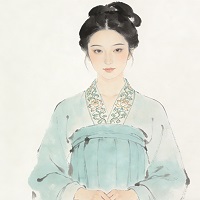
Emperor Yang of Sui, whose real name was Yang Guang, ruled as the second and final leader of China’s short-lived Sui Dynasty from 581 to 618 CE, and while he is mostly remembered for huge projects like the Grand Canal, his love for luxury, and how his rule fell apart, his wife—the empress—also played a quiet but meaningful part in that era.
1. Origins and Family Lineage
Empress Xiao was born into the well-known Xiao family from the small state of Western Liang, which existed during the time of the Southern and Northern Dynasties, and although her exact given name wasn’t clearly written down in early records—though some later writings refer to her as Xiao Meizhu—she was the daughter of Xiao Kui, the last ruler of Western Liang, which gave her both noble roots and strong political connections.
2. Union with Yang Guang
She married Yang Guang around the year 583, back when he was still known as the Prince of Jin, and since his father, Emperor Wen of Sui, wanted to build better ties with powerful families in the south, he arranged their marriage; even though it started as a practical alliance, they appeared to have a steady and respectful relationship, and she went on to have several children with him, including their first son, Crown Prince Yang Zhao.
3. Tenure as Empress Consort
After Yang Guang took the throne in 604, she officially became empress, and unlike some other imperial wives who tried to influence state matters, she chose to stay out of politics and instead lived by old-fashioned values like being humble, calm, and careful with resources, which earned her quiet admiration inside the palace.
4. Personal Qualities and Public Image
Ancient Chinese books such as theBook of Sui and theZizhi Tongjian paint her as thoughtful, level-headed, and plain in her habits—traits that stood in sharp contrast to her husband’s flashy and wasteful ways—and though she often asked him to cut back on spending and avoid risky wars, he rarely listened, yet historians in later generations still spoke well of her character.
5. Exile, Return, and Final Years
When the Sui Dynasty collapsed because of widespread uprisings, Empress Xiao faced many years of struggle; after Emperor Yang was killed in 618, she was taken by the rebel Yuwen Huaji, and not long after, she ended up living among the Eastern Turks (also called the Tujue), where she stayed for more than a decade until 630, when the Tang army defeated them and Emperor Taizong of Tang arranged for her safe return to Chang’an—she passed away soon after at an old age and was buried beside her husband, a sign that even a new ruling family could show respect for the past.
6. Enduring Historical Impact
Through war, loss, and exile, Empress Xiao held onto her sense of right and wrong, and while her husband’s choices led to disaster, she remained steady and kind; because of this, many writers in later times saw her as the ideal example of a good empress—one who kept her dignity no matter how hard things got.
Empress Xiao was far more than just the spouse of a fallen ruler; her life reflects how women of high rank handled duty, change, and crisis during a chaotic time in early medieval China, and even though she doesn’t get as much attention as her husband, her story still matters when we try to understand the full picture of the Sui Dynasty.